An ecology game about bringing a world back to life — and learning how to keep it alive. Guide roots through the earth to hidden water, restore the soil and plant the beginnings of an ecosystem. Above ground, every new arrival changes the balance.
One world. Before and alive.
DRAG TO EXPLORE
THE FIRST HEARTBEATA LIVING WORLD
‹ Ⅱ ›
One landscape, one camera. Slide from bare earth to towering sequoias, wildflowers and a world alive with wildlife.
Illustrated with in-game art · In development
HEART→ROOTS→WATER→LIVING WORLD
Turn on sound: the Heart sets the beat. The roots build the melody.
Interactive arrangement using the game’s music engine. Sound starts only when you press play.
A WORLD WITH A LIFE OF ITS OWN
You create the conditions. Life finds its way.
Guide roots to water and choose what to grow. Animals arrive, feed, hunt and spread seeds on their own. Your choices shape their habitat; your role is to help the ecosystem stay in balance.
How a world grows.
Follow the connections from the first root to a living forest. New species arrive when water, food and shelter can support them.
01
First, find water.
The Heart→Roots reach water→Living soil
Guide roots toward hidden springs. Moisture spreads through the connected ground, making the first growth possible.
02
The ground wakes up.
First grass→Life in the soil→Moles & tunnels
Grass takes hold. Soil beetles and earthworms help the ground recover. Moles feed on worms and open tunnels that roots can follow.
03
A meadow feeds new arrivals.
Flowers→Pollinators→More blooms & berries
Food & shelter→Voles & hares
Flowers draw bees and butterflies; pollination helps the meadow spread. Grass and berries support grazers, whose growing numbers change how much food remains.
04
The meadow becomes a forest.
A layered forest→Birds & deer→Seeds spread
Hints of deep water→Springs & ponds→Pond life
Trees create shade and shelter. Birds and deer carry seeds, helping new growth appear. Fireflies hint at hidden water; connected springs can fill a pond and support fish.
05
Predators help keep the balance.
Meadow grazers→Foxes & owls→The meadow recovers
A larger food web→The forest cat
Foxes limit hares and voles; owls hunt voles and moles at night. The forest cat feeds on deer, hares and foxes. Each population changes the others — a healthy habitat keeps the whole web going.
06
Grow a world worth protecting.
PARK FINALE · PLANNED
A connected ecosystem→Protect the habitat→A national park
Answer drought, fire and human pressure by protecting water and plant life. Our planned North American finale brings the forest toward national-park status, with larger wildlife such as the grizzly bear.
Water, food and shelter connect every stage. These arrows show ecological relationships and the journey of a growing world.
A FIELD GUIDE TO YOUR WORLD
Meet the inhabitants.
Every resident has a reason to arrive, a place to live and a role in the web of life. Explore the animals taking shape in Heart of the World.
A flowering meadow draws them in. They pollinate flowers and berry bushes, helping the plants that feed the rest of the ecosystem.
Butterflies
Different flowers and a nearby tree make a home for butterflies. They carry pollen farther across the meadow, connecting patches of new growth.
Hares
Grass, berries and shelter help hares thrive. A growing population can graze the meadow bare; a healthy fox population gives the plants time to recover.
Voles
Small grazers that settle in grassy ground. They are part of the food web for foxes and owls, and their numbers matter to the meadow’s balance.
The forest & its huntersDeer · Foxes · Owls · The forest cat+
Deer
Deer need a generous meadow, trees and a watering place. Their arrival marks a richer habitat, but too many hungry mouths can exhaust its vegetation.
Foxes
Foxes follow hares and voles, switching toward plentiful prey. They help keep grazing in check, so a busy meadow can stay green.
Owls
A mature tree gives an owl a home. At night it hunts voles and surplus moles, adding another quiet check on the food web.
The forest cat
This larger hunter needs an established forest. It keeps deer, hares and even foxes in check: predators, too, are part of the balance.
Wings, water & night lightsFinches · Pond fish · Fireflies+
Finches
Trees provide shelter for these little birds. They carry seeds to living patches of soil, helping flowers and berries spread beyond your planting.
Pond fish
Connect underground water to fill the surface pond. These small fish make it their home, and a living pond helps the landscape support more birds.
Fireflies
A living meadow has a different cast after dark. Follow these tiny lights: they gather near hidden deep water, hinting at where your roots could go next.
Under your feetSoil beetles · Earthworms · Moles+
Soil beetles
Some of the first residents beneath the roots. They make their home in living soil, bringing movement to a world that first looked empty.
Earthworms
Worms work through humus in moist soil, helping the ground recover. In this game, a population that outgrows its food can damage living soil.
Moles
Moles keep worms in check and dig tunnels that roots can follow more easily. Their molehills change the surface, too: animals avoid grazing on them.
01
A heartbeat becomes a song.
The Heart pulses, sending light through the roots you draw. As the ecosystem grows, new musical layers and animal voices join in. We’re building a living score where every species has its own part.
02
Discover how life connects.
Follow a branching discovery tree from the first grass to a thriving forest. Create the right conditions and new life arrives naturally. Species cards explain what each resident needs and what it gives back.
03
Protect what you’ve grown.
Drought and fire can undo a meadow’s recovery. Loggers threaten the trees; water pumps drain springs. Guide roots, bring rain and find ways to protect the habitat. People can become allies, too: a conservationist stands up for the forest.
04
Every discovery has a story.
Earn achievements for your first root, a new spring or a stable balance between predator and prey. Uncover buried curiosities, collect discoveries in your herbarium and learn why even the smallest resident matters.
FIRST DESTINATION / NORTH AMERICA
Grow a wilderness worth protecting.
Our first chapter is growing toward a North American national park: from pollinators and grazing animals to a forest that can support a grizzly bear. Beyond it, we envision new lands with their own food webs, music and wildlife — lions in Africa, jaguars in the Amazon and tigers in Asia.
In development. The national-park finale and later regions are part of our roadmap.
THE JOURNEY WE’RE BUILDING
One Heart. Three living worlds.
From North American forests to the African savanna and the Amazon rainforest: each region brings its own plants, wildlife, ecological challenges and evolving music. You guide roots and water. Life finds its own way.
living worlds
3
progression stages
22
animal types
~50
Planned scope · Three distinct landscapes, each unfolding through its own sequence of growth and discovery.
01
North America
Forest of red giants
10 stages · 26 animal types
Grow a meadow into a forest of towering redwoods. Restore streams, protect old trees and help people learn to share the land.
Bees pollinate berries. Hares and deer spread seeds. Foxes and the forest cat keep grazers in balance; beavers, salmon and a grizzly join the growing web.
A world with its own soundRoots, birdsong and water, growing into guitar, banjo and wooden flute.
Meet all 26 planned residents
Soil beetles
Earthworms
Moles
Voles
Hares
Bees
Fox
Deer
Owl
Fireflies
Butterflies
Silver fish
Seed-spreading birds
Forest cat
Bald eagle
Pileated woodpecker
Tree frogs
Great blue heron
Red-tailed hawk
Raccoon
Beaver
Salmon
Dipper
Anna’s hummingbird
American robin
Grizzly bear
02
Africa
Baobab savanna
6 stages · 12 animal types
Bring water to a sun-dried savanna of acacias and baobabs. Build a habitat that can support herds, nesting birds and a pride of lions.
Termites renew the soil. Impalas and zebras graze, elephants reshape the habitat, and cheetahs and lions help the grass recover.
A world with its own soundInterlocking kalimba, wooden percussion and a gentle call-and-response.
Meet all 12 planned residents
Termites
Dung beetles
Savanna bees
Meerkats
Weaver birds
Impalas
Zebras
Giraffes
Elephants
Cheetah
Martial eagle
Lion
03
Amazonia
The layered rainforest
6 stages · 12 animal types
Wake a rainforest from its roots to its canopy. Follow rising rivers, restore rich soil and protect the water that connects the whole forest.
Leafcutter ants work below the canopy. Bees and hummingbirds pollinate, agoutis carry seeds, and ocelots, harpy eagles and jaguars complete the food web.
A world with its own soundRain, berimbau and wooden flute over a soft Brazilian-inspired rhythm.
Meet all 12 planned residents
Leafcutter ants
Orchid bees
Hermit hummingbird
Agouti
Tambaqui
Capybara
Three-toed sloth
Red howler monkey
Lowland tapir
Ocelot
Harpy eagle
Jaguar
North America: 10 park destinations
The North American chapter is planned around ten park-inspired landscapes. Each stage reveals a new background and a park card, from Zion’s red cliffs to Yellowstone’s geysers. These destinations are milestones within the region.
ZionAwakening
Mount RainierMeadow
Sequoia & Kings CanyonGrove
Great Smoky MountainsForest
RedwoodLoggers
Crater LakeWater pump
GlacierRoad
OlympicDam
YosemiteTrail of giants
YellowstoneGuardian of the forest
Beyond these first three worlds, we’re exploring Europe, Russia and Asia — each with a different ecosystem. The journey is in development; regions and wildlife will arrive in stages.
ANOTHER DOOR
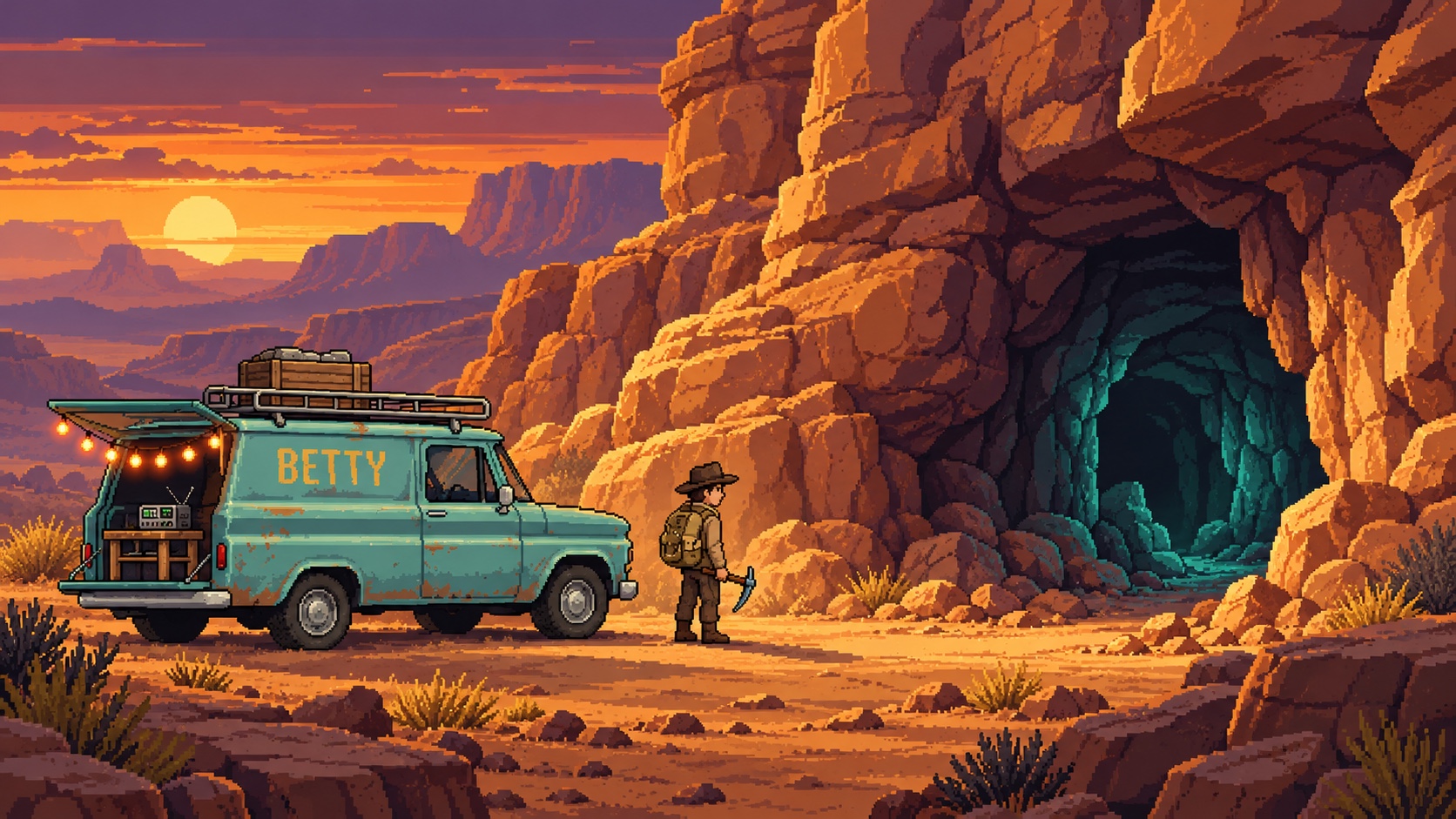
Cave Explorer
A pickaxe, a rope and a torch. An adventure beyond the last patch of light.
Start with a truck-mounted drill and grow a working industrial site. Sell your ore, buy equipment and watch your operation take shape above the shaft.
Explore to 1,200 metres, manage heat, water and drill wear, and investigate three side deposits. Take a quick ore delivery or a longer research contract — each choice changes what you can build next.
1,200 mplayable depth
17equipment upgrades
3side deposits
Play the demo↗Free · No download · Progress saved in this browser
Early playable prototype. The full journey to Earth’s core is still in development.
Play now
EST. 2026 / KEEP EXPLORING
02 / ON THE OTHER SIDE
A few pixels. A lot of curiosity.
We love games where a small action starts a bigger story. One root brings a forest back to life. One light opens a path through a cave. Those moments are what Rendli is made of.
Curiosity+Living systems+Your own pace
03 / FOR THE CURIOUS
Take a closer look.
Our logo, short intro and studio description, all in one place.